huberwoods's pick · Updated July 2026
Enameled Cast Iron Dutch Oven
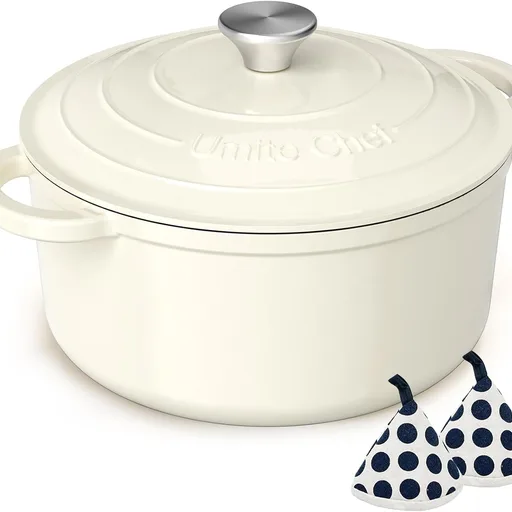
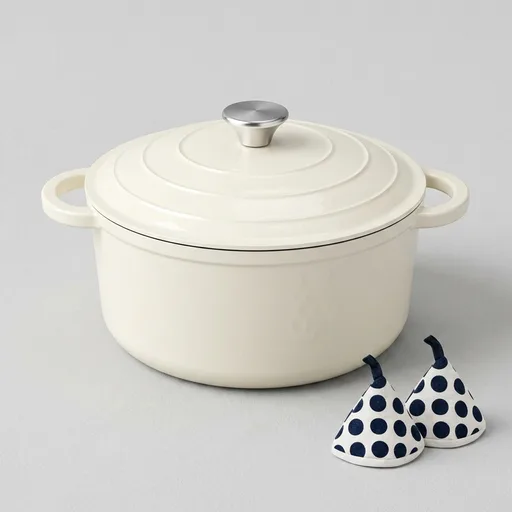
A 5 quart enameled cast iron Dutch oven like this one may suit cooks who want one pot that can move from stovetop to oven and handle bread baking, braising, stews, and roasting without much fuss. The size is in the range that usually works for small households, weekly meal prep, or anyone who wants a pot large enough for a loaf, a batch of stew, or a modest roast without taking over the whole burner. The cream white finish also makes it the kind of piece some people leave on the counter or bring straight to the table, especially if they prefer cookware that looks less utilitarian than bare cast iron.
The main reason to consider a Dutch oven in this category is the combination of heat retention and even heating. Enameled cast iron is generally chosen for dishes that benefit from steady heat over time, and that makes it a reasonable option for recipes that start with a sear and finish with a long, covered cook. The lid matters as much as the pot itself, since a tight cover helps hold moisture for braises and stews and can support better oven baking for bread. If you are comparing this type of pot to lighter cookware, the tradeoff is usually weight versus stability: the heavier build can help with heat, but it also changes how easy the pot is to lift when full.
A fair thing to verify before buying is the usable capacity and the weight when loaded with food. Five quarts sounds generous, but Dutch oven sizes can feel smaller or larger depending on the shape of the sides and how much room the lid needs. It is also worth checking the enamel care notes, especially whether the maker recommends low or medium heat, which utensils are safest, and how they want the pot cleaned. Enameled cast iron can be a practical choice, but it still benefits from careful use rather than rough treatment.
The included cotton potholders are a small convenience detail, but they should be treated as a bonus rather than the main reason to choose the pot. What matters more is the core cookware: the thickness of the walls, the quality of the enamel finish, the fit of the lid, and whether the handles are easy to grip with oven mitts. Those are the things that tend to separate a pot that feels comfortable in regular use from one that is awkward or hard to trust when hot.
Because there are no usage notes here, the evidence posture has to stay simple: this is a neutral recommendation based on the product category and the listing facts, not on hands-on testing. That means the best next step is to compare the stated size, weight, finish, and care instructions against the recipes you actually cook. For someone who wants a versatile Dutch oven for bread, slow cooking, and oven braising, this may be a sensible fit if the dimensions and handling match the kitchen setup. For anyone sensitive to heavy cookware or unsure about enamel care, those are the details to verify first.
Amazon product links on this guide are not currently affiliate links. Neither huberwoods nor Buyer Field Guide earns an affiliate commission from them.
See current price